

Tankless vs. Traditional Water Heaters for LA Homes
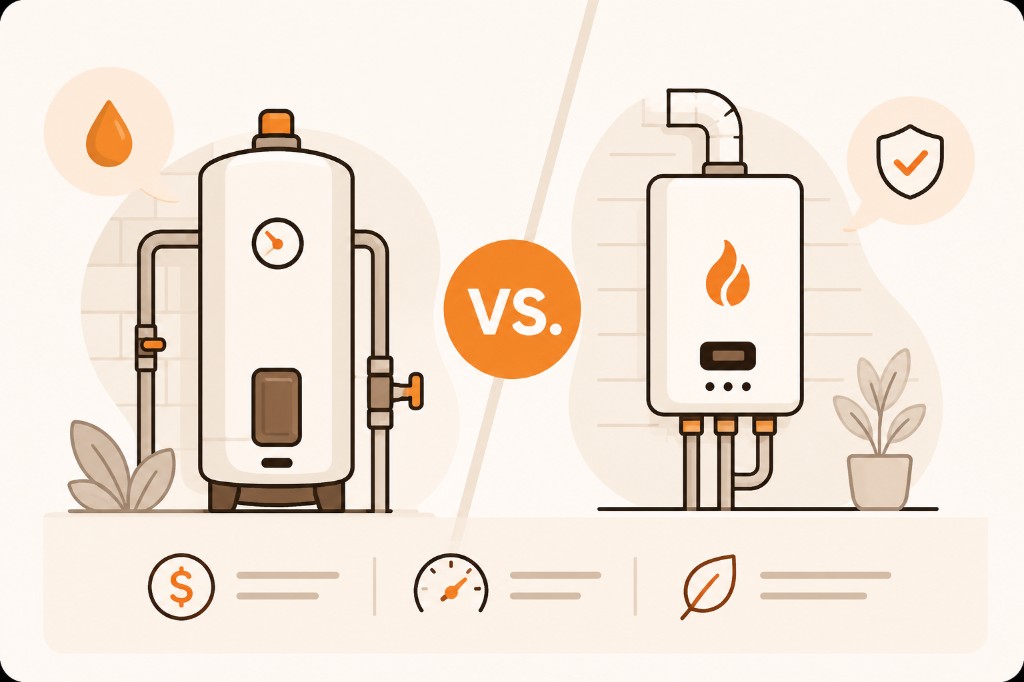
Los Angeles homeowners ask us about tankless conversions every week. Both systems work — but the right choice depends on your home's gas line, hot-water habits, and how long you plan to stay. Here's an honest comparison from technicians who install both.
How Each System Works
Traditional tank heaters store 40–75 gallons of hot water and keep it heated around the clock. Tankless units heat water on demand as it flows through a heat exchanger — no storage tank, no standby heat loss.
In LA’s mild climate, both perform well. The difference shows up in your gas bill, available space, and how many fixtures run hot water at the same time.
Upfront Cost Comparison
Tank replacements typically cost less to purchase and install — often a straightforward swap on an existing pad with minimal line work. Tankless installations run higher because they may require larger gas lines, new venting, electrical upgrades, or relocation of the unit.
Our take: If you’re selling within a few years, a quality tank replacement may be the smarter spend. Planning to stay 5+ years? Tankless often pays back through efficiency and longevity.
Energy Efficiency in Southern California
Tankless units eliminate standby losses — energy spent keeping 50 gallons hot while you’re at work. Most LA homeowners see 20–30% lower water-heating costs after conversion, though actual savings depend on usage patterns and whether you previously had an older, inefficient tank.
Tank models have improved significantly. High-efficiency tanks with thick insulation narrow the gap, especially for smaller households with moderate demand.
Hot Water Capacity & Flow Rate
This is where tankless gets misunderstood. A tank delivers a burst of stored hot water — great for back-to-back showers if the tank is sized correctly. Tankless delivers endless hot water at a limited flow rate. Run the shower, dishwasher, and laundry simultaneously and you may exceed the unit’s gallons-per-minute rating.
Proper sizing — and sometimes multiple units for large homes — solves this. We calculate peak demand before recommending a model.
Lifespan & Maintenance
Traditional tanks last 8–12 years in hard-water areas like Los Angeles. Tankless units often run 15–20 years with annual descaling — especially important given LA’s mineral-heavy water. Skipping maintenance on either system shortens life and voids warranties.
Space & Installation Considerations
Tankless units mount on a wall and free floor space — popular in garages, utility closets, and ADU conversions. They still need clearance for venting and service access. Some older LA bungalows need gas line upsizing before a tankless will perform correctly.
What We Recommend for LA Homeowners
- Small household, long-term stay: Tankless — efficiency and space savings add up
- Large family, heavy simultaneous use: High-capacity tank or multiple tankless units
- Tight budget, near-term sale: Modern efficient tank replacement
- Hard water without softening: Factor descaling into tankless maintenance costs
Every home is different. Our water heater technicians inspect your existing setup, gas supply, and venting before quoting either option — no pressure to upsell.
Hard Water in Los Angeles: What It's Doing to Your Pipes
LA's hard water silently damages pipes, water heaters, and fixtures. Here's what homeowners need to know — and how to fix it.
Read article
10 Signs You Need a Plumber (Don't Ignore #7)
Some plumbing problems hide until they become expensive disasters. Here are 10 warning signs LA homeowners should never ignore.
Read article
Why Your Water Bill Is So High (and How to Fix It)
A sudden LADWP bill spike usually means a hidden leak or running toilet. Here's how to diagnose and fix it fast.
Read article
Ready to Upgrade Your Water Heater?
Get a free consultation — we'll size the right system for your home and quote it upfront.